

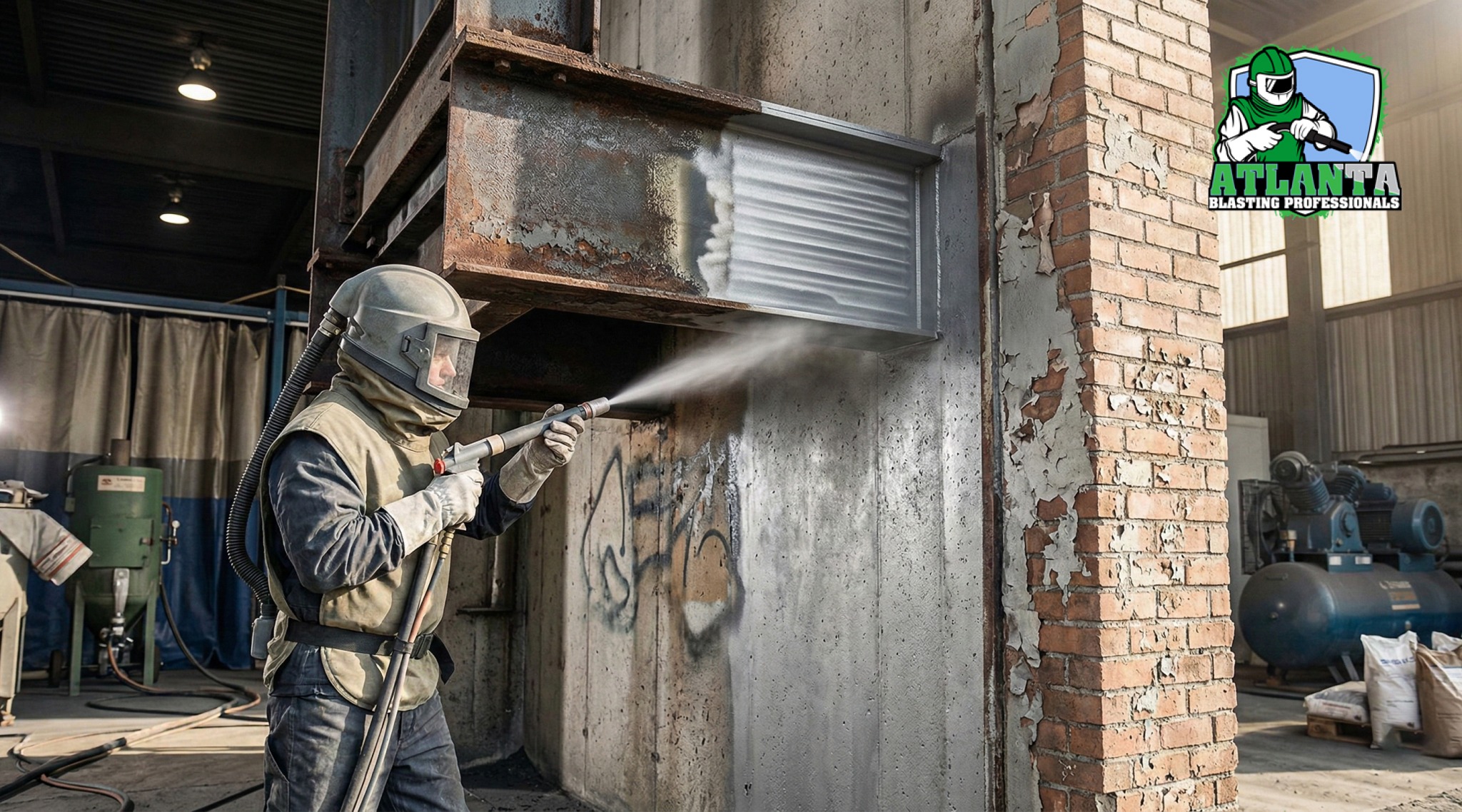
When it comes to sandblasting surface preparation, the most important question isn’t simply what material is being blasted, it’s what needs to be removed from the surface.
Paint failure, rust, industrial buildup, efflorescence, limescale, and graffiti all require controlled removal. Abrasive blasting is one of the most effective methods for eliminating these bonded contaminants, but success depends on selecting the correct media, pressure per square inch (PSI), and blasting techniques appropriate for the specific substrate.
Surface preparation is not about limitations. It’s about precision.
What Makes a Surface a Good Candidate for Abrasive Blasting?
A surface is typically well-suited for abrasive blasting when it has:
- Peeling or failed paint.
- Industrial coatings or sealers.
- Rust or corrosion.
- Efflorescence or mineral deposits.
- Limescale buildup.
- Graffiti.
- Fire or smoke damage.
- Heavy surface contamination.
If a material requires mechanical profiling or complete coating removal, abrasive blasting is often the preferred solution because it both cleans and creates the proper surface profile for adhesion.
Material compatibility should always be evaluated before blasting to ensure the correct process is applied. Softer surface materials are often not good candidates for sandblasting due to the abrasive nature of the process and in those cases it’s a best practice to conduct a “test blast” to see if the surface material can be removed without etching or damaging the underlying substrate.
Surface Preparation Is About Method, Not Material Alone
Abrasive blasting is a controlled process. Professional contractors adjust several variables based on the substrate and project goals, including:
- Abrasive media type.
- Air pressure (PSI).
- Nozzle size.
- Blast distance from surface.
- Moisture control.
- Containment and dust mitigation systems.
When properly calibrated, blasting can safely and effectively prepare a wide range of commercial and industrial surfaces.
Common Surfaces Prepared with Abrasive Blasting
Metal Surfaces (Steel, Iron, Aluminum)
Structural steel, equipment, tanks, railings, pipelines, and machinery are among the most common surfaces prepared using abrasive blasting. This process removes:
- Rust.
- Mill scale.
- Old coatings.
- Industrial contaminants.
- Environmental buildup.
Hard metals like steel can tolerate aggressive media when required. Softer metals such as aluminum require reduced pressure and carefully selected abrasives to prevent distortion or surface damage. When handled by experienced operators, both can be safely prepared.
Concrete
Concrete is highly compatible with abrasive blasting and is frequently prepared for:
- Epoxy or urethane coatings.
- Industrial flooring systems.
- Waterproofing applications.
- Surface restoration projects.
Blasting removes sealers, coatings, and surface stains while leaving a surface profile necessary for strong adhesion when applying new paint or coatings.. Dust-controlled systems are commonly used in commercial and industrial environments.
Masonry & Brick
Brick and masonry surfaces are often blasted to remove:
- Graffiti.
- Efflorescence.
- Mold & Mildew.
- Paint and coatings.
- Fire & smoke damage.
Historic or softer masonry requires a controlled approach to protect mortar joints and surface integrity. Media selection and pressure calibration are critical to avoid unnecessary surface erosion.
Glass, Fiberglass & Specialty Surfaces
Glass and fiberglass can be treated in controlled conditions when specialty media and reduced PSI settings are used. These materials require careful evaluation prior to blasting and should only be handled by experienced professionals to prevent etching or surface damage.
In some cases, alternative cleaning or preparation methods may be recommended depending on the project requirements.
The Real Risk: Improper Technique
Surface damage typically does not occur because a material is unsuitable — it occurs when the blasting method is incorrect.
Common causes of damage include:
- Using improper abrasive media.
- Excessive air pressure.
- Incorrect nozzle distance.
- Inexperienced operation.
- Poor equipment calibration.
Professional blasting contractors evaluate the surface condition, substrate type, and project goals before selecting the appropriate method.
Sandblasting vs. Modern Media Blasting
The term “sandblasting” is often used generically. In modern surface preparation, alternative abrasives are commonly used, such as:
- Crushed glass.
- Steel grit.
- Aluminum oxide.
- Organic media (walnut shell, corn cob).
- Baking soda.
Media selection determines cleaning effectiveness, surface profile, dust levels, and overall project safety.
Why Proper Surface Preparation Matters
Proper surface preparation directly impacts:
- Coating adhesion.
- Corrosion resistance.
- System longevity.
- Overall project durability.
Inadequate preparation is one of the leading causes of coating failure. Investing in professional abrasive blasting ensures long-term performance and protects the integrity of the substrate.
Final Thoughts
Effective sandblasting surface preparation is about evaluating the surface condition, selecting the proper media, and controlling the process with precision.
Surfaces requiring removal of paint, coatings, rust, mineral deposits, or contamination are often strong candidates for abrasive blasting, provided the method is correctly matched to the substrate. Surface restoration is often a cost effective way to extend the life of building materials vs. replacing them.
Atlanta Blasting Professionals brings industry knowledge, modern equipment, and controlled on-site capabilities to commercial and industrial projects throughout the region. By focusing on proper media selection, calibrated pressure, and professional standards, we ensure each surface is properly prepared, maximizing coating performance, durability, and long-term value.
Contact us today to discuss your project.
FAQ's
Many commercial and industrial surfaces can be prepared using abrasive blasting when the correct media and pressure settings are applied. Each substrate should be evaluated before beginning work.
Yes. Aluminum can be safely prepared when lower PSI levels and appropriate media are used. Professional calibration prevents distortion or surface damage.
Surfaces with rust, paint failure, heavy coatings, efflorescence, limescale, graffiti, or industrial contamination are often strong candidates for abrasive blasting.
The correct method depends on the substrate, the blast media selected and the type of material being removed. The required surface profile, environmental conditions, and final coating system be reapplied.
Experienced contractors ensure proper media selection, controlled pressure, regulatory compliance, and long-lasting coating performance.