

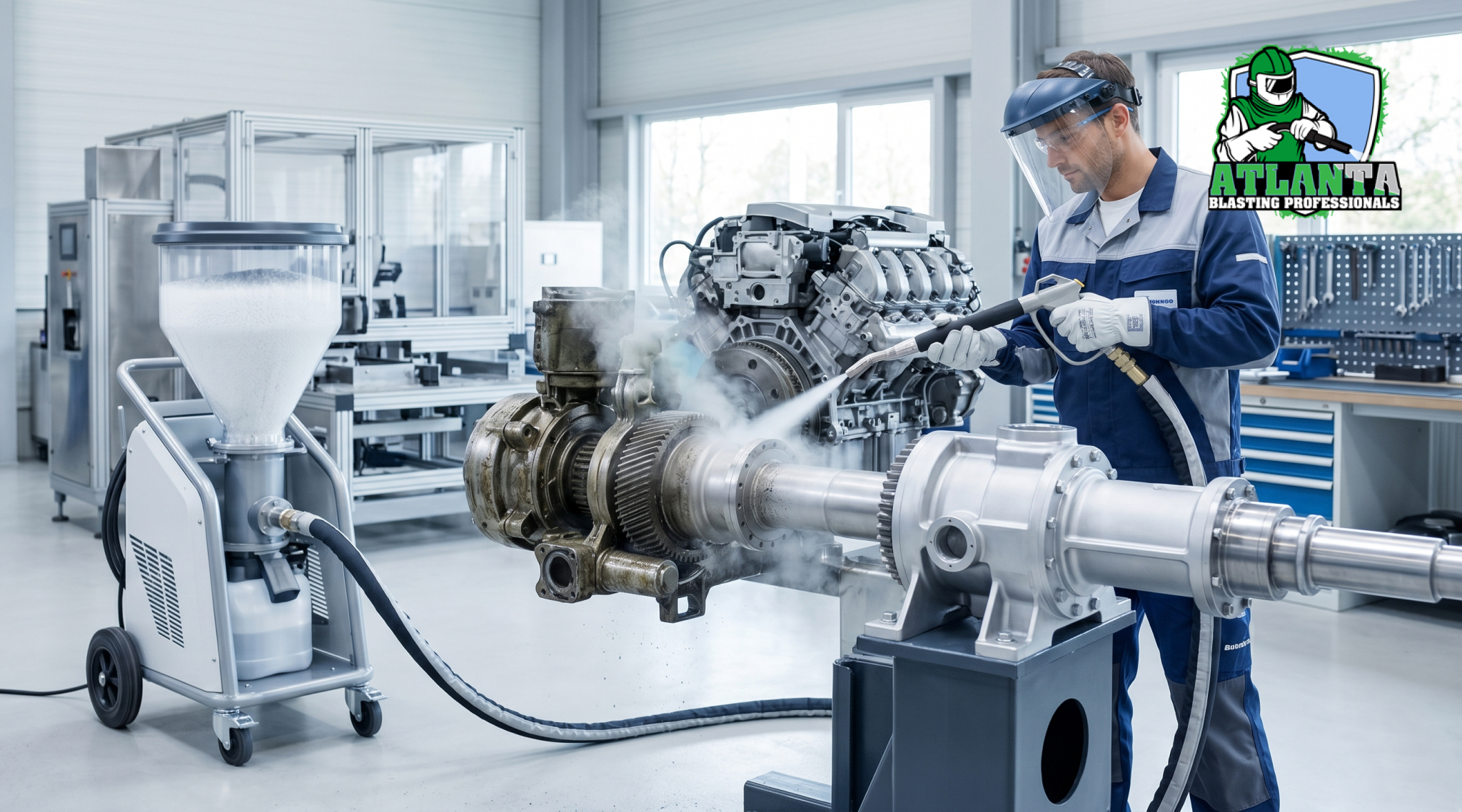
When it comes to modern industrial cleaning, traditional methods like sandblasting, chemical cleaning, or pressure washing often fall short, either causing damage, creating waste, or increasing downtime. This is where dry ice blasting, also known as CO₂ blasting or ice blasting, is changing the game.
This advanced cleaning method uses solid CO₂ pellets to remove contaminants without abrasion, water, or chemicals, making it one of the most efficient and eco-friendly solutions available today.
In this guide, we’ll explore dry ice blasting surfaces, its best use cases, and why it’s becoming the preferred choice for dry ice blasting for industrial cleaning.
What is Dry Ice Blasting?
Dry ice blasting is a non-abrasive cleaning process where compressed air propels dry ice pellets at high speed onto a surface. Upon impact, the pellets sublimate (turn from solid to gas), lifting contaminants without damaging the underlying material.
Unlike dry ice sandblasting, which people often assume is abrasive, true CO₂ blasting does not wear down surfaces, it cleans them safely and effectively.
What Makes Dry Ice Blasting Different?
At first glance, people often confuse dry ice blasting with traditional abrasive methods like sandblasting. Some even refer to it as dry ice sandblasting, but that’s not entirely accurate.
Here’s what actually happens:
- Dry ice pellets are accelerated using compressed air
- When they hit a surface, they create a combination of kinetic impact + thermal shock
- The extreme cold weakens the bond between the contaminant and the surface
- The pellets instantly sublimate (turn into gas), lifting away dirt without residue
This process is what makes dry ice cleaning:
- Non-abrasive
- Moisture-free
- Chemical-free
- Safe for delicate and high-value surfaces
Understanding Why Surface Compatibility Matters
Not every cleaning method works for every surface. For example:
- Sandblasting can damage soft materials
- Water cleaning can ruin electronics
- Chemicals can leave harmful residues
That’s why dry ice blasting surfaces are so important to understand—because this method is specifically designed for situations where other cleaning approaches fail.
Best Surfaces for Dry Ice Blasting (With Real-World Context)
1. Metal Surfaces: Heavy-Duty Cleaning Without Damage
Metal is one of the most common applications for dry ice blasting for industrial cleaning.
Think about:
- Manufacturing equipment covered in grease
- Engines with carbon buildup
- Industrial tools exposed to oils and coolants
Traditional cleaning either:
- Scratches the surface
- Leaves residue
- Requires disassembly
With ice blasting, contaminants are removed without affecting the base metal at all.
Why it works so well:
- No abrasion means no wear and tear
- No chemicals means no corrosion risk
- Perfect for precision parts
2. Electrical Equipment: Cleaning Without Risk
This is where CO₂ blasting truly shines.
Cleaning electrical systems is usually risky because:
- Water causes short circuits
- Chemicals can damage components
- Dust buildup reduces efficiency
But dry ice cleaning is:
- Non-conductive
- Completely dry
- Safe for sensitive components
This makes it ideal for:
- Control panels
- Motors and generators
- Robotics and automation systems
And the biggest advantage?
Cleaning can often be done without shutting down operations.
3. Plastic & Composite Surfaces: Precision Without Scratches
In industries like automotive and manufacturing, even minor surface damage can ruin a product.
That’s why dry ice blasting surfaces like:
- Plastic molds
- Automotive interiors
- Fiberglass panels
…are cleaned using CO₂ blasting.
Key Benefit:
It removes contaminants like oils and release agents without altering the surface finish or dimensions.
4. Rubber & Soft Materials: Gentle Yet Effective
Soft materials are usually difficult to clean because:
- Abrasive methods damage them
- Chemicals degrade them over time
With ice blasting, you can safely clean:
- Conveyor belts
- Rubber rollers
- Seals and gaskets
It removes sticky buildup and residues while keeping the material intact.
5. Painted & Coated Surfaces: Controlled Cleaning
One of the most interesting uses is dry ice blasting paint removal.
Unlike aggressive stripping methods, CO₂ blasting can:
- Remove contaminants without removing paint
- Or selectively remove coatings when needed
This makes it useful for:
- Surface preparation
- Equipment restoration
- Maintenance cleaning
6. Food Processing Equipment: Hygiene Without Chemicals
In food production, cleaning isn’t just about appearance, it’s about safety.
Dry ice cleaning is widely used because it:
- Leaves no chemical residue
- Doesn’t introduce moisture (which can cause bacterial growth)
- Cleans hard-to-reach areas
Common uses include:
- Ovens and baking equipment
- Conveyor belts
- Packaging machines
7. Delicate & Historic Surfaces: When Gentle Cleaning Matters
For restoration projects, aggressive cleaning can permanently damage surfaces.
That’s why ice blasting is used for:
- Brick and stone cleaning
- Historical restoration
- Sensitive materials
It removes dirt and contaminants while preserving the original structure.
Where Dry Ice Blasting Excels in Real Applications
Understanding surfaces is only half the story. Let’s look at where this method truly delivers value.
Industrial Cleaning at Scale
Factories and plants deal with:
- Heavy grease
- Carbon buildup
- Continuous production residue
Dry ice blasting for industrial cleaning allows:
- Faster cleaning cycles
- No dismantling
- Minimal disruption
Maintenance Without Downtime
This is one of the biggest business advantages.
Instead of stopping operations, companies can:
- Clean equipment in place
- Avoid costly shutdowns
- Maintain productivity
Mold, Smoke & Contamination Removal
For industries dealing with:
- Mold growth
- Fire damage
- Industrial contamination
CO₂ blasting offers deep cleaning without chemicals, making it safer and more effective.
Adhesive & Residue Removal
Removing adhesives is usually frustrating and time-consuming.
With dry ice blasting, the combination of cold temperature and impact:
- Weakens adhesive bonds
- Removes residue quickly
- Leaves surfaces clean
Why Are More Businesses Searching “Dry Ice Blasting Near Me”?
Search trends like “dry ice blasting near me” and “ice blasting near me” are growing, and for good reason.
Businesses are actively looking for:
- Faster cleaning solutions
- Safer alternatives to chemicals
- Methods that reduce downtime
And dry ice cleaning delivers on all three.
Limitations: Where It’s Not the Best Fit
To keep expectations realistic:
- Not ideal for very soft or fragile materials
- Not designed for heavy rust removal
- Requires controlled environments for best results
Final Thoughts
Dry ice blasting (CO₂ blasting) is not just another cleaning method, it’s a smarter, more advanced solution designed for modern industries that demand precision, safety, and efficiency.
From heavy machinery and industrial equipment to delicate electronics and sensitive surfaces, dry ice cleaning delivers results without the downsides of traditional methods
- No abrasion
- No moisture
- No secondary waste
It helps businesses reduce downtime, improve maintenance processes, and protect high-value assets.
If you’re exploring dry ice blasting for industrial cleaning, working with experienced professionals makes all the difference. At Atlanta Blasting Professionals, we specialize in delivering high-quality ice blasting services tailored to different industries, ensuring safe and effective results every time.
So, what are you waiting for? Contact us today!
FAQ's
Dry ice blasting is used for a wide range of cleaning applications, especially in industrial environments where traditional methods are either too harsh or inefficient. It is commonly used to remove grease, oil, carbon deposits, mold, adhesives, and even light coatings from machinery and surfaces.
What makes it unique is that it cleans without damaging the underlying material. Because it is dry and non-abrasive, it’s widely used in industries like manufacturing, food processing, automotive, and electrical maintenance. It’s especially valuable when equipment needs to be cleaned without disassembly or downtime.
It depends on the application, but in many cases, yes. Unlike traditional sandblasting (often referred to as dry ice sandblasting, though that’s technically incorrect), dry ice blasting is completely non-abrasive.
This means:
- It won’t scratch or wear down surfaces
- It preserves the original finish
- It doesn’t create secondary waste like sand or grit
However, sandblasting may still be better for heavy-duty tasks like removing thick rust or deeply embedded coatings. Dry ice blasting is ideal when surface protection and precision cleaning are more important.
Yes, dry ice blasting paint removal is possible, but it depends on the type of paint and how strongly it’s bonded to the surface.
Dry ice blasting works by creating thermal shock, which weakens the bond between the paint and the surface. This allows certain coatings to be removed without damaging the material underneath.
In some cases, it’s used to:
- Strip paint selectively
- Clean surfaces without removing the coating
- Prepare surfaces for repainting
It’s a great option when you want controlled paint removal without aggressive abrasion.
Yes, dry ice cleaning is considered one of the safest methods for cleaning electrical and electronic equipment.
This is because:
- It is non-conductive
- It contains no water or moisture
- It leaves no residue behind
Traditional cleaning methods can cause short circuits or corrosion, but CO₂ blasting eliminates those risks. That’s why it’s widely used for cleaning control panels, motors, generators, and other sensitive systems, often without needing to shut them down.
If you’re looking for professional services, the easiest way is to search online using terms like “dry ice blasting near me” or “ice blasting near me.”
When choosing a service provider, consider:
- Their experience with your specific industry
- The type of equipment they use
- Safety standards and certifications
- Customer reviews or case studies
A good provider will also assess your cleaning needs and recommend whether CO₂ blasting is the right solution for your situation.