

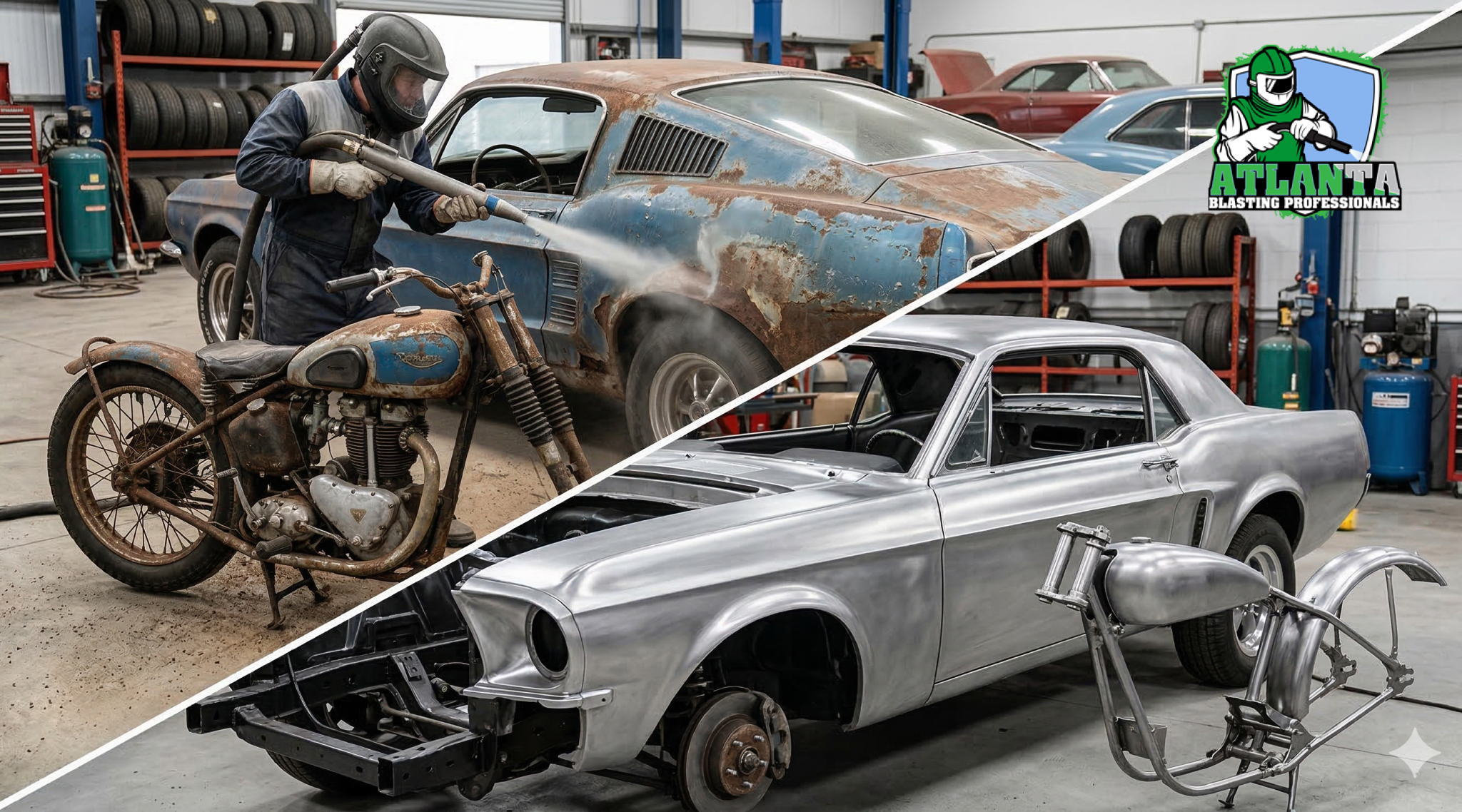
Restoring an old car or motorcycle is more than just replacing parts and applying fresh paint. It’s about bringing the vehicle back to its original strength, beauty, and character. Over time, rust, grease, old paint layers, and corrosion take a toll on metal surfaces. This is where automotive sandblasting services play a crucial role in professional vehicle restoration.
Sandblasting is one of the most effective methods to strip surfaces down to bare metal, creating a clean foundation for repairs, coatings, and refinishing. Whether you’re restoring a classic muscle car or a vintage motorcycle, sandblasting can dramatically improve the final results.
What is Sandblasting in Vehicle Restoration?
Sandblasting (also known as abrasive blasting) uses high-pressure air to propel abrasive materials against metal surfaces. This process removes rust, paint, scale, and contaminants without relying on harsh chemicals.
For vehicle restoration, sandblasting for cars and motorcycles is used to clean:
- Frames and chassis.
- Body panels.
- Engine components.
- Wheels and suspension part.
Once blasted, surfaces are ready for welding, priming, powder coating, or painting—ensuring long-lasting finishes.
How Sandblasting Restores Old Cars & Motorcycles: Step-by-Step Process
Step 1: Vehicle Inspection and Surface Assessment
Professionals inspect the car or motorcycle to identify rust, corrosion, old paint layers, and fragile areas. This evaluation helps determine the right blasting method, including whether dustless blasting for car restoration is required for sensitive panels.
Step 2: Disassembly of Parts
Key components such as trim, rubber seals, wiring, and glass are removed. For motorcycles, frames, fuel tanks, wheels, and brackets are separated to ensure accurate and safe sandblasting of motorcycles without damaging critical parts.
Step 3: Selection of Blasting Media and Pressure
Different metals require different abrasive materials and pressure levels. Skilled technicians carefully select the media to remove corrosion efficiently while protecting the metal— proper media and blast pressures per square inch are especially important when sandblasting cars with thin body panels.
Step 4: Sandblasting the Vehicle Components
Using professional automotive sandblasting services, high-pressure air removes rust, paint, and contaminants from all surfaces, including hard-to-reach areas. For classic restorations, dustless blasting is often used to minimize heat and prevent warping.
Step 5: Revealing Hidden Damage
Once the metal is exposed, hidden cracks, deep rust, and weak spots become visible. Identifying these issues early ensures repairs are completed correctly before repainting or coating begins. Weakened metal through corrosion will be exposed during sandblasting and may require welding or bonding to repair the metal.
Step 6: Surface Preparation for Repairs and Coating
After blasting, the surface is clean and ready for welding, priming, powder coating, or painting. This step ensures strong adhesion and long-lasting finishes when you hire a sandblasting contractor for vehicle restoration.
Step 7: Final Cleaning and Quality Inspection
The final stage involves removing blasting residue and performing a quality check to ensure uniform results. The vehicle is now ready for the next phase of restoration.
Why Sandblasting is Ideal for Old Cars
Old cars often have multiple layers of paint and hidden rust that traditional sanding methods can’t fully remove. Sandblasting for cars allows restorers to:
- Remove stubborn rust from seams and corners.
- Strip decades-old paint evenly.
- Reveal hidden structural damage early.
- Prepare metal for professional-grade coatings.
This process ensures that repairs aren’t just cosmetic but structurally sound, helping classic cars last for years to come.
Sandblasting Motorcycles: Precision Meets Performance
Motorcycles require extra care due to their smaller parts and detailed components. Sandblasting motorcycles helps restore parts such as:
- Frames and swingarms.
- Fuel tanks.
- Engine casings.
- Wheels and brackets.
Professional Sandblasting removes corrosion without damaging metal integrity when done correctly. The result is a clean, uniform surface that enhances both performance and appearance.
Dustless Blasting for Car Restoration: A Modern Alternative
For restorers looking for a gentler and cleaner approach, dustless blasting for car restoration is an excellent option. This technique combines water with abrasive media to reduce heat, friction, and airborne dust.
Key Benefits include:
- Minimal warping of thin metal panels.
- Reduced dust and environmental impact.
- Safer for delicate vehicle parts.
- Faster cleanup after blasting.
Dustless blasting is especially popular for classic car restoration, where preserving original metal is critical.
Advantages of Hiring Professional Automotive Sandblasting Services
While DIY blasting may seem cost-effective, vehicle restoration demands precision and expertise. When you hire a sandblasting contractor for vehicle restoration, you gain access to:
- Industry-grade equipment and media selection.
- Controlled pressure settings for different metals.
- Experienced handling of classic and custom vehicles.
- Compliance with safety and environmental standards.
Professionals ensure the job is done right the first time – saving you time, money, and costly mistakes.
When Should You Use Sandblasting in a Restoration Project?
Sandblasting is best used during:
- Full car or motorcycle restorations.
- Rust repair projects.
- Paint stripping before repainting.
- Frame-off restorations.
- Custom builds and modifications.
Starting your project with proper surface preparation dramatically improves the durability and appearance of the final result.
Trust Atlanta Blasting Professionals for Vehicle Restoration
If you’re restoring a car or motorcycle in Georgia, working with experienced Atlanta Blasting Professionals ensures precision and reliability. Local experts offer advanced automotive sandblasting services, including for cars and motorcycles, as well as dustless blasting for car restoration.
By choosing skilled Atlanta Blasting Professionals, you start your restoration project with confidence, knowing your vehicle is in expert hands from the very first step.
FAQ's
Yes, when performed by professionals, sandblasting is safe for classic vehicles. Experts adjust the blasting pressure and abrasive media based on the metal type. For delicate panels, dustless blasting for car restoration is often used to prevent warping or surface damage.
Most metal parts can be sandblasted, including frames, chassis, body panels, wheels, suspension components, and engine parts. Both sandblasting for cars and sandblasting motorcycles are commonly used during full or partial restoration projects.
The duration depends on the vehicle’s size, condition, and the blasting method used. Smaller motorcycle parts may take a few hours, while full car bodies can take one to two days when handled by professional automotive Sandblasting services.
Traditional sandblasting uses dry abrasive media, while dustless blasting for car restoration combines water with abrasives. Dustless blasting produces less dust, is more eco-friendly and reduces heat build up on metal surfaces, and is well suited for thin metal panels and vintage vehicles.
When you hire a sandblasting contractor for vehicle restoration, you ensure proper media selection, correct pressure control, and safe handling of valuable parts. Professionals deliver consistent results and help avoid costly damage during the restoration process.