

16
Mar 2026
Proper surface preparation is the foundation of any successful coating or corrosion-protection system. Whether you are preparing steel for industrial coatings, structural applications, or commercial projects, understanding sandblasting profile standards and compliance with NACE and SSPC blasting standards is critical.
This guide explains sandblasting surface profiles, cleanliness levels, and how NACE & SSPC standards ensure long-lasting coating performance.
What is a Sandblasting Surface Profile?
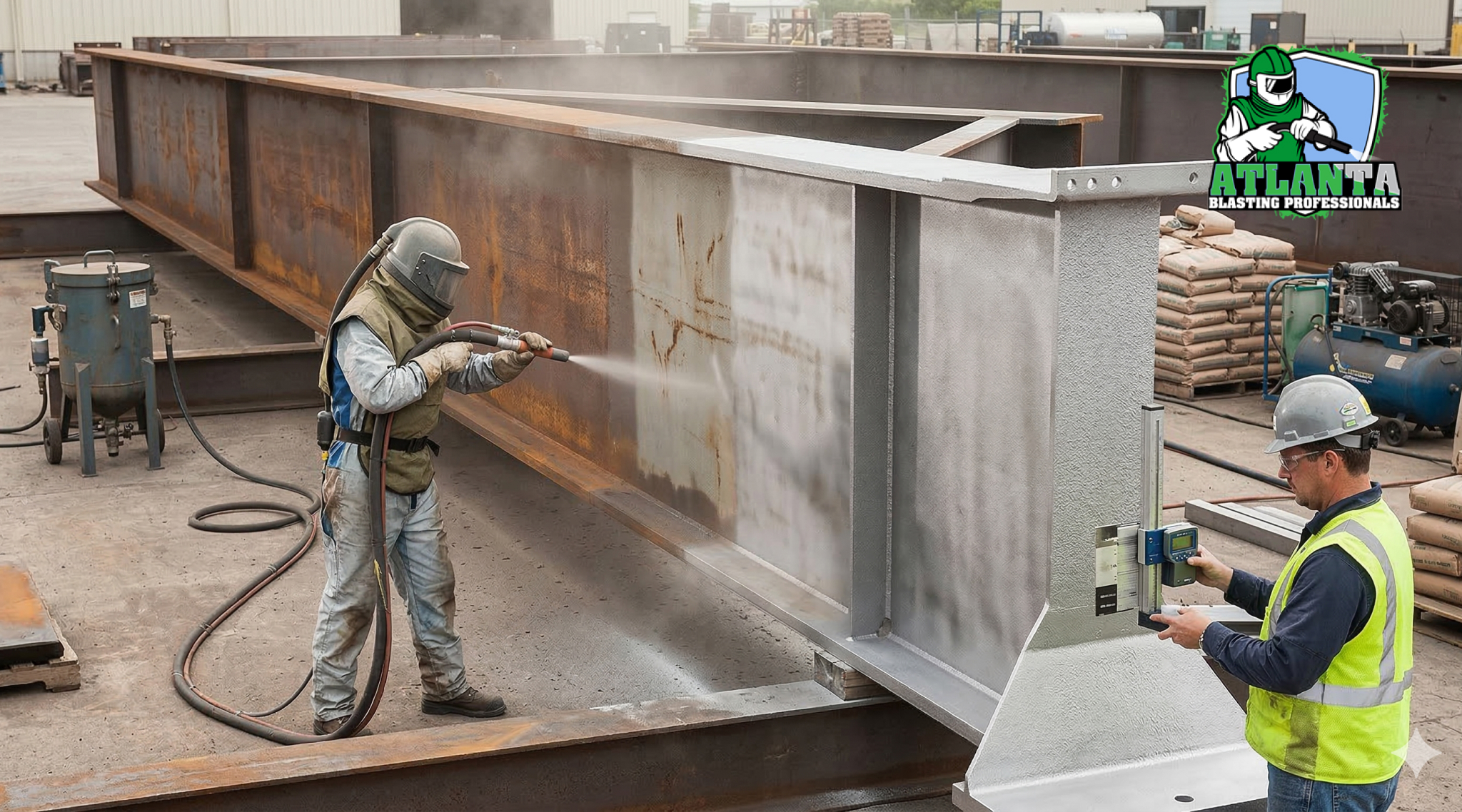
A sandblasting surface profile refers to the microscopic peaks and valleys created on a surface during abrasive blasting. This roughened texture allows coatings to bond effectively to the substrate, improving adhesion and durability. A properly achieved sandblasting surface profile guide ensures:- Strong coating adhesion.
- Reduced risk of premature coating failure.
- Improved corrosion resistance.
Why Sandblasting Profile Standards Are Important
Following established sandblasting profile standards ensures consistency, safety, and performance across projects. These standards help contractors and inspectors verify that the surface has been prepared correctly before coating application. Key benefits include:- Compliance with project specifications.
- Improved coating lifespan.
- Reduced maintenance and repair costs.
- Better quality control during inspections.
Overview of NACE Blasting Standards
NACE (National Association of Corrosion Engineers) standards focus on achieving specific cleanliness levels through abrasive blasting. NACE blasting standards are widely used in corrosion-control projects. Common NACE surface preparation levels include:NACE No. 1 – White Metal Blast Cleaning
- Highest level of cleanliness.
- Removes all visible contaminants.
- Used for severe corrosion environments.
NACE No. 2 – Near-White Metal Blast Cleaning
- Allows minimal staining.
- Ideal for high-performance coatings.
NACE No. 3 – Commercial Blast Cleaning
- Removes most rust, mill scale, and coatings.
- Common for industrial applications.
NACE No. 4 – Brush-Off Blast Cleaning
- Light cleaning for less demanding environments.
Overview of SSPC Blasting Standards
SSPC (Society for Protective Coatings) blasting standards are widely used across the United States to define how clean a surface must be before applying protective coatings. These standards focus on removing contaminants such as rust, mill scale, old paint, oil, and dirt through abrasive blasting. The goal of SSPC blasting standards is to create a surface that allows coatings to properly adhere and perform over time. Each SSPC standard specifies a different level of surface cleanliness, depending on the service environment’s demands.SSPC-SP5 – White Metal Blast Cleaning
SSPC-SP5 is the highest level of surface cleanliness in abrasive blasting.- Removes all visible contaminants, including rust, mill scale, coatings, grease, and dirt.
- Leaves a uniform, metallic appearance.
- No stains or shadows are allowed.
- Severe corrosion environments.
- Chemical plants and refineries.
- High-performance coating systems.
SSPC-SP10 – Near-White Metal Blast Cleaning
SSPC-SP10 provides a very high level of cleanliness, slightly less strict than SP5.- Allows very light staining on up to 5% of the surface area.
- Most contaminants are completely removed.
- Produces an excellent surface for coating adhesion.
- Industrial steel structures.
- Bridges and infrastructure.
- Heavy-duty epoxy and polyurethane coatings.
SSPC-SP6 – Commercial Blast Cleaning
SSPC-SP6 is a moderate level of surface preparation and is widely used in general industrial projects.- Removes most rust, mill scale, and old coatings.
- Some staining may remain.
- Less strict than SP5 and SP10.
- Industrial buildings.
- Structural steel.
- Equipment not exposed to extreme conditions.
SSPC-SP7 – Brush-Off Blast Cleaning
SSPC-SP7 is a light blasting standard used when full removal of coatings or corrosion is not required.- Removes loose rust, loose paint, and surface contaminants.
- Tightly bonded material may remain.
- Improves surface texture for better coating adhesion.
- Maintenance repainting.
- Light-duty coating systems.
- Surfaces in mild service environments.
Sandblasting Cleanliness Levels Explained
Sandblasting cleanliness levels define how free a surface is from contaminants such as rust, mill scale, oil, and old coatings. Cleanliness is typically evaluated visually using industry reference standards. Higher cleanliness levels are required for:- Protective coatings.
- Corrosion-resistant systems.
- Long-term industrial applications.
Blast Profile Requirements for Coatings
Different coatings require different surface profiles. Blast profile requirements for coatings depend on:- Coating type.
- Coating thickness.
- Environmental exposure.
- Thin coatings require a finer profile.
- Heavy-duty epoxy coatings need a deeper anchor profile.
How Sandblasting Surface Profiles Are Measured
Surface profile depth is measured using industry-approved tools such as:- Replica tape.
- Surface profile gauges.
- Visual comparators.
Choosing a Professional Sandblasting Service Near You
Hiring an experienced sandblasting service is essential for meeting industry standards. A qualified contractor ensures:- Compliance with NACE & SSPC requirements.
- Proper equipment and abrasives.
- Consistent quality control.
- Safe and efficient project execution.
Industries That Rely on NACE & SSPC Standards
These standards are critical across many industries, including:- Structural steel and fabrication.
- Bridges and infrastructure.
- Manufacturing facilities.
- Commercial and industrial buildings.
Conclusion
Understanding sandblasting profiles, NACE blasting standards, and SSPC blasting standards is essential for achieving durable, long-lasting coatings. By following established surface preparation standards NACE & SSPC, projects benefit from better adhesion, corrosion resistance, and overall performance. If you are looking for a reliable sandblasting service near you, working with experienced professionals ensures your surfaces are prepared correctly from the start. Need Expert Sandblasting Services? Atlanta Blasting Professionals delivers high-quality surface preparation solutions that meet NACE & SSPC standards, ensuring reliable results for industrial and commercial projects. Contact us today!FAQ's
A sandblasting surface profile is the rough texture created on a surface during abrasive blasting. This profile helps coatings bond properly to the surface, improving adhesion, durability, and corrosion resistance.
Sandblasting cleanliness levels ensure that contaminants like rust, mill scale, and old coatings are removed before painting. Proper cleanliness prevents coating failure and extends the life of protective coatings.
Blast profile requirements determine how well a coating adheres to a surface. If the profile is too shallow or too deep for the coating type, it can lead to poor adhesion, cracking, or premature coating failure.
Choose a sandblasting service with experience in NACE and SSPC standards, proper equipment, trained technicians, and quality control processes. Professional surface preparation ensures compliance and long-lasting results. Keep in mind that the profile chosen has a direct correlation on the cost per square foot for media blasting, with Nace 1 being the most expensive and Nace 4 being the least expensive.