

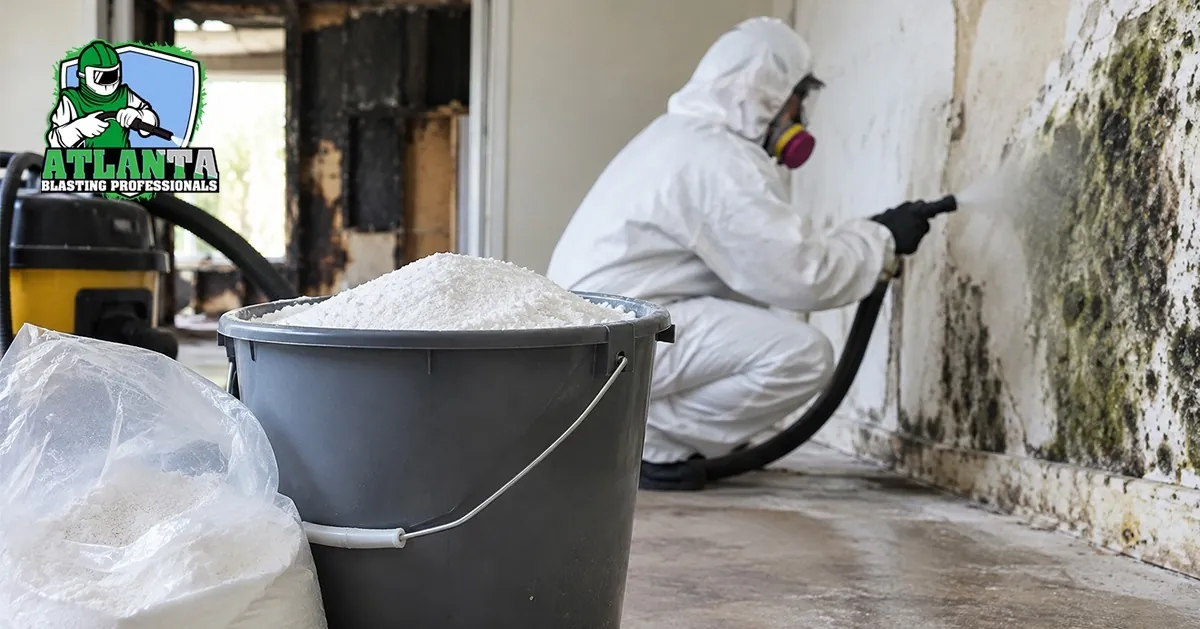
For more than three decades, sodium bicarbonate commonly known as baking soda has served as an eco-friendly blasting media for removing stubborn contaminants, smoke damage, and mold spores. Whether restoring a fire-damaged property or preparing surfaces for fresh encapsulation, soda blasting provides a gentle yet powerful cleaning solution. It safely strips away residue and acts as a degreaser for a wide range of materials, including wood, masonry, steel, aluminum, plastics, and composites, without damaging the underlying surface.
A Safer Alternative to Harsh Chemicals and Abrasives
Traditional restoration and blasting methods often introduce serious environmental and health hazards, primarily through toxic dust emissions and hazardous waste disposal:
- Traditional Sand and Slags: Standard sand blasting releases crystalline silica, a known hazardous air pollutant. Meanwhile, smelter slags (such as coal, copper, and nickel) contain heavy metals that become airborne during application and pose long-term environmental risks after disposal.
- Chemical Strippers: Liquid chemical cleaners frequently rely on toxic solvents like phenols and methylene chloride. These harsh chemicals create hazardous runoff, meaning both the stripping agent and the rinse water require expensive, regulated hazardous waste disposal.
Non-Toxic and Biodegradable
Sodium bicarbonate eliminates these risks. It holds a “0” hazard rating under the U.S. Hazardous Materials Identification System, confirming that it is non-toxic, non-hazardous, and completely biodegradable. Soda blasting releases zero hazardous emissions into the air. With a mild, near-neutral pH of 8.2, it is neither caustic nor corrosive, making it safe for technicians, property owners, and the surrounding environment while naturally helping to neutralize acidic smoke odors left behind by fires.
Less Waste and Easier Site Cleanup
Soda blasting significantly reduces the burden of post-remediation cleanup. Compared to traditional sand blasting, sodium bicarbonate generates less than 20 percent of the total waste volume for the exact same amount of work. Because baking soda is not regulated by the U.S. Department of Transportation as a hazardous material, dry spent media can be easily collected and transported to a standard landfill in accordance with local regulations.
Water-Soluble Sustainability
One of sodium bicarbonate’s greatest environmental advantages is its complete water solubility. Unlike glass or sand abrasives that leave behind grit and accumulate in soil or surrounding structures, soda dissolves cleanly in water.
Because it does not permanently bond with the mold or soot it removes, contaminants can be easily separated and filtered out of the water solution. Once filtered, the remaining liquid can typically be safely discharged into local sewage systems (subject to local guidelines). In fact, because sodium bicarbonate naturally buffers acidity, it can actually benefit municipal and industrial wastewater treatment facilities by helping balance pH levels without the need for costly neutralizing chemicals.
Conclusion: Choose a Cleaner Approach to Restoration
Sodium bicarbonate offers a practical and environmentally conscious alternative to many traditional abrasive and chemical cleaning methods. Its water-soluble properties, relatively low hazard profile, and effective cleaning performance make it a valuable option for suitable fire damage and mold remediation projects. From removing stubborn smoke and soot residues to preparing surfaces for restoration, soda blasting can help professionals achieve effective cleaning while reducing abrasive waste.
At Atlanta Blasting Professionals, we offer professional soda blasting and surface cleaning services for fire damage restoration, mold remediation, and other specialized cleaning projects. Our team focuses on using effective blasting techniques to remove stubborn contaminants while preserving suitable underlying surfaces. Contact Atlanta Blasting Professionals to learn how our soda blasting services can support your next restoration project with a cleaner and more responsible approach.