

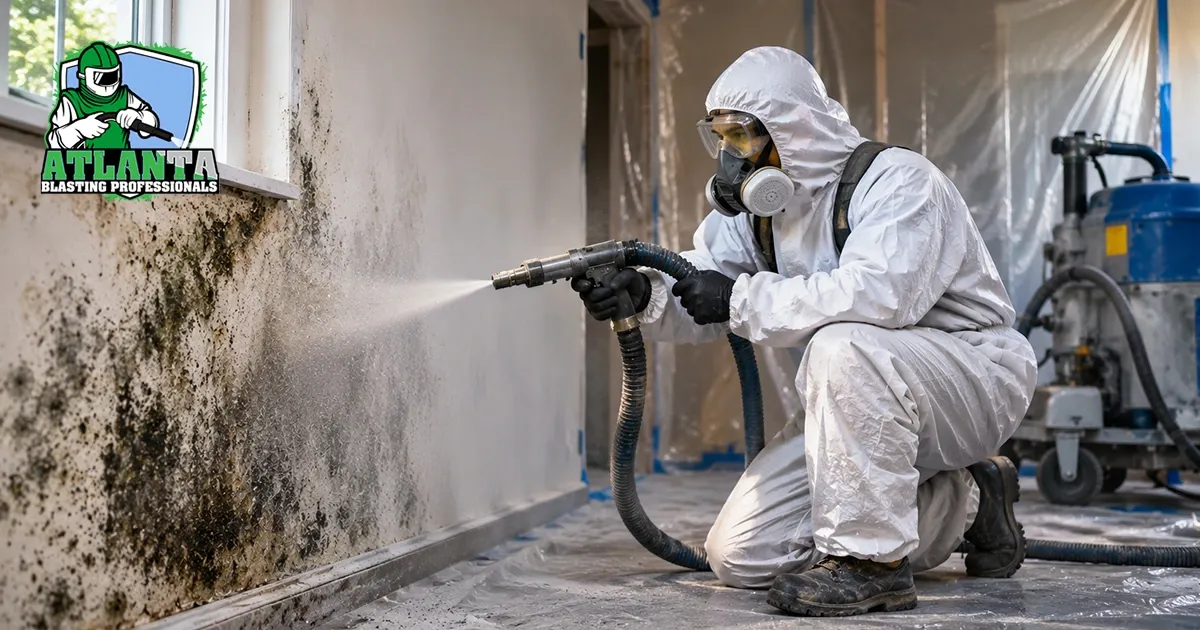
Indoor mold has become a major concern for both homeowners and commercial property managers, and for good reason. When mold takes hold inside a house or commercial facility, it can trigger a wide range of health issues. These problems range from minor annoyances like itchy eyes, sneezing, and coughing to severe allergic reactions, asthma attacks, and even potential long-term lung damage. For businesses, an outbreak also means costly downtime, liability risks, and disrupted operations.
Understanding How Mold Grows and Affects Health
Mold spores exist naturally in the air around us. For these spores to grow indoors, they only need four things: moisture, oxygen, a food source, and a surface to settle on. Once they land on a damp spot—whether in a residential basement or a commercial HVAC closet—and start multiplying, trouble begins.
According to health and safety guidelines, molds produce allergens, irritants, and sometimes toxic substances known as mycotoxins. Touching or inhaling mold spores can cause immediate or delayed allergic reactions in sensitive individuals, leading to hay fever symptoms like a runny nose, red eyes, and skin rashes. Even for people without mold allergies, exposure can irritate the eyes, skin, nose, throat, and lungs, and it frequently triggers asthma attacks in asthmatic family members, tenants, or employees.
Modern Mold Assessment and Remediation
As experts learn more about the dangers of indoor mold, the methods used to find and remove it continue to evolve. In the occupational health field, this process is broken down into two critical steps:
- Mold Assessment: Identifying exactly where the mold is located and how severe the hazard is within a home or commercial structure.
- Mold Remediation: Safely containing, cleaning up, and removing the mold from the indoor environment.
Because mold spores and contaminated dust are hazardous, remediation should be handled by professionals experienced in construction, demolition, and airborne-particle containment. Historically, removing mold meant hours of exhausting, manual labor like hand-scrubbing and sanding. Today, however, a faster and more effective technique is gaining popularity: abrasive blasting.
What is Abrasive Blasting?
The best way to fight mold is to prevent it by controlling indoor moisture and fixing leaks or flood damage right away. However, if mold has already started growing, it must be completely removed, and damaged surfaces must be cleaned or repaired.
Abrasive blasting—also called media blasting—cleans surfaces by using compressed air or a centrifugal wheel to shoot fine particles at high speeds against a target area. While materials like sand and corncobs are used in heavy industry, mold remediation professionals typically rely on dry ice or sodium bicarbonate (baking soda).
Why Media Blasting Beats Traditional Methods
Switching from manual scrubbing to abrasive blasting offers major advantages for both residential cleanups and large-scale commercial projects:
- Saves Time and Labor: Blasting eliminates tedious hand-sanding, drastically cutting down project timelines so families can return home and businesses can reopen faster.
- Reaches Tight Spaces: It easily cleans awkward, hard-to-reach areas like cramped attics, residential crawlspaces, and complex commercial utility rooms.
- Handles Irregular Surfaces: Surfaces with cross-bracing, ceiling joists, bridging, or protruding nails (such as the underside of a deck or warehouse framing) can be cleaned thoroughly without getting snagged on rough edges.
A Closer Look at Soda-Blasting
Soda-blasting is a specific type of abrasive blasting that uses compressed air to propel sodium bicarbonate particles. While it is a rising star in modern mold removal, the technology actually gained fame decades ago during the restoration of the Statue of Liberty.
In May 1982, President Ronald Reagan appointed Lee Iacocca to lead a private-sector fundraising effort alongside the National Park Service and The Statue of Liberty-Ellis Island Foundation, Inc. That $87 million restoration used soda-blasting to safely clean the monument before it reopened to the public on July 5, 1986, for its centennial celebration.
The baking soda used in this process is specially manufactured so that every crystal has a uniform size and a microscopic, knife-like shape. Despite its sharp edges, baking soda is soft, water-soluble, and has a near-neutral pH. This allows it to strip away stubborn mold without damaging delicate underlying materials like wood framing, PVC pipes, commercial ductwork, or modern electrical wiring.
When technicians use the right air pressure, angle, and nozzle size, soda-blasting removes mold quickly while keeping waste and dust to a minimum. Using the correct nozzle also reduces the total amount of baking soda needed, which gives workers better visibility on the job and leaves much less mess to clean up afterward.
Protect Your Property and Health Today
Don’t let hidden mold compromise your family’s health or shut down your business operations. Whether you are dealing with moisture damage in a single-family home or need fast, reliable remediation for a commercial facility, modern media blasting can restore your property safely and efficiently.
Ready to eliminate mold for good? Contact our certified remediation team today to schedule a thorough mold assessment and get a customized cleanup plan for your home or business.